
The Measure of Us
PROGRAMME
Barber of Seville Overture (8mins)
Gioachino Rossini (1792-1868)
Pavane Op. 50 (6mins)
Gabriel Fauré (1845-1924)
Chocolats Symphoniques
1. Chocolat au caramel
2. Chocolat noir
3. Chocolat à la menthe
4. Chocolat au café
Maxime Goulet (b. 1980)
INTERMISSION - ENTRE’ACTE
Piano Concerto No. 5 in E♭ major, Op. 73 (Emperor)
1. Allegro
2. Adagio un poco mosso
3. Rondo: Allegro ma non troppo
Ludwig Van Beethoven (1770-1827)
The running time is approximately 120 minutes with a 20 minute intermission
MUSICIANS
Eve Legault, conductor
Dr. Marc Ruel, piano
VIOLIN 1
Sarah Williams
Alana Gralen
Galina Rezaeipou
Maria Nenoiu
Solange Tremblay
Anita Hiradhar
VIOLIN 2
Hanna Williamson
Micheline Kinsella
George Stathopoulos
Carolyn Ho
Alla Perevalova
Lisa Taras
VIOLA
Gunnar Foerstel
Tobie Slipert
Shannon Mardan
Laurence Laforest
CELLO
Thaddeus Morden
Jean-François Marquis
Aidan Fleet
Keith Lau
BASS
Iris Leck
Andrew Roberts
Peter Kilpatrick*
FLUTE
Jeffrey Miller
Lara Deutsch+
+Lara performs on a 14k gold Haynes flute, generously loaned by Canimex Inc. of Drummondville, Québec.
OBOE
Susan Morris
Marat Mulyukov
CLARINET
Shauna Barker
Roxanne Leveille
BASSOON
Ben Glossop
Orlando Corabian
HORN
Nigel Bell
Jennifer MacDonald
TRUMPET
Alexandre Rocheleau
Lynn Peterson
TIMPANI
Nathaniel Mears
PERCUSSION
Dominique Moreau
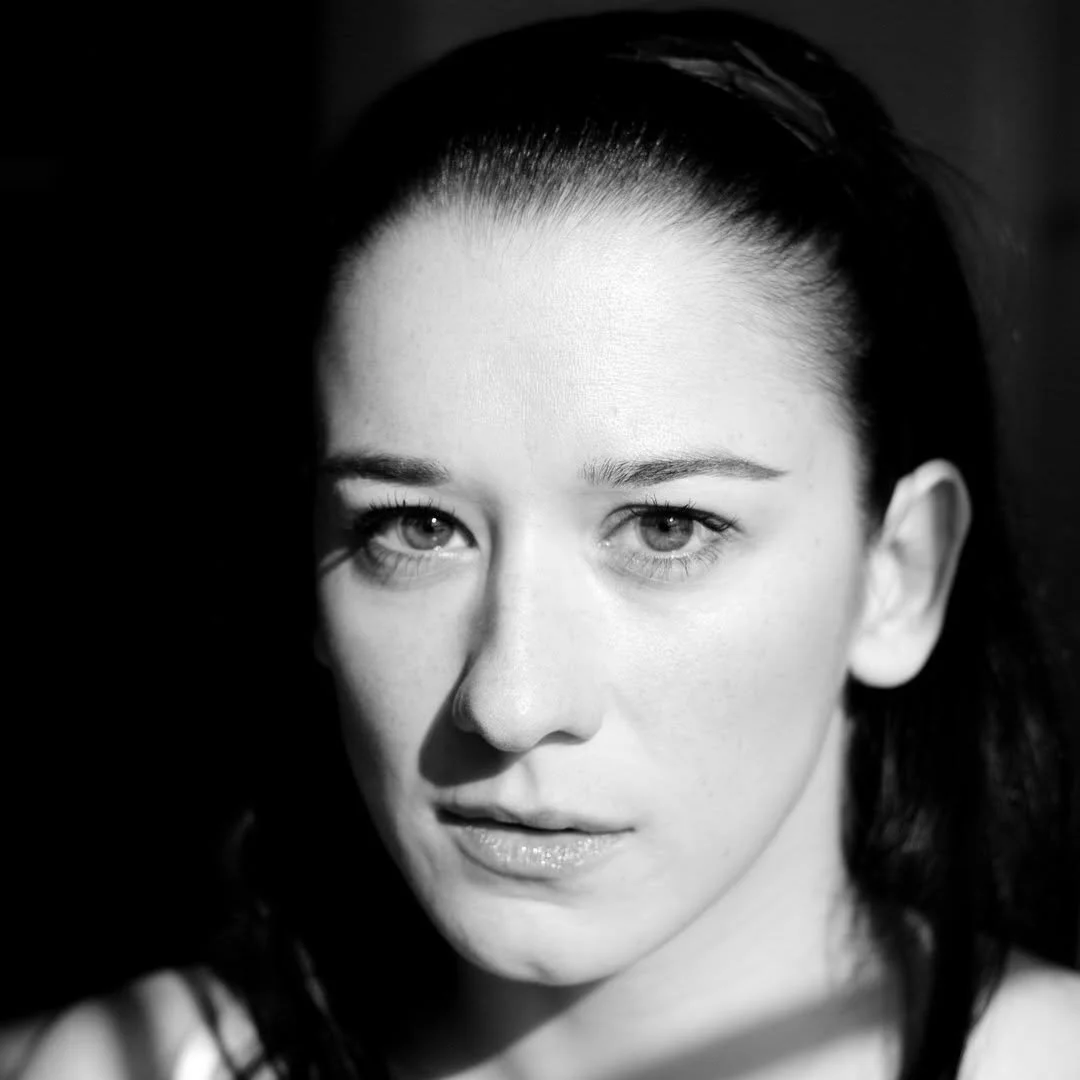
Eve Legault
Conductor
-
Originally from Gatineau, Quebec, Eve is known for her expressive and dynamic presence on the podium. She is currently a full-time conductor in Tapestry Opera’s Women in Musical Leadership (WML) program. Over the past two years, she has collaborated with the program's partner organizations across Canada. Eve was recently nominated for the 2026 Heinz Unger Award, given by the Ontario Council for the Arts. Conducting appearances include the Calgary Philharmonic Orchestra, Kingston Symphony Orchestra and Guelph Symphony Orchestra. She also worked with the Shaw Festival, Orchestre symphonique de Gatineau, Ottawa Chamber Orchestra and National Youth Orchestra of Canada. She participated in the RBC Canadian Conductor Showcase with Daniel Raiskin and the Winnipeg Symphony Orchestra. She was the Principal Conductor of the Pembroke Symphony Orchestra from 2023 to 2025.
Between 2020 and 2026, she served on 18 engagements with the National Arts Centre Orchestra in Ottawa as Guest Assistant Conductor to Alexander Shelley, John Storgårds, Dalia Stasevska, Xian Zhang and David Briskin. In the same capacity, she has worked with the Hamilton Philharmonic Orchestra, Symphony Nova Scotia, Manitoba Opera, Opera Kelowna, Tapestry Opera and Orchestre de la Francophonie. Through the WML program, she has received mentorship from Gustavo Gimeno, Sarah Ioannides, Evan Mitchell, Tyrone Paterson, Daniel Raiskin, Paul Sportelli and Rosemary Thomson.
Previously, she held several roles within the international opera community. She completed graduate studies in three disciplines: conducting, piano and collaborative piano. She holds a Doctor of Musical Arts degree from the Manhattan School of Music in New York, where she was the recipient of the Helen Cohn Award. Eve was awarded a Social Sciences and Humanities Research Council of Canada Doctoral Fellowship. She has also received four grants from the Conseil des arts et des lettres du Québec, as well as a grant from the Canada Council for the Arts to participate in conducting masterclasses in Europe (Kenneth Kiesler and the Berlin Sinfonietta; Tomáš Netopil and the Moravian Philharmonic Orchestra). During masterclasses with Sasha Mäkilä and the Helsinki Metropolitan Orchestra, she was twice selected by the musicians as the "Orchestra's Favorite Conductor".
Dr. Marc Ruel
Piano
-
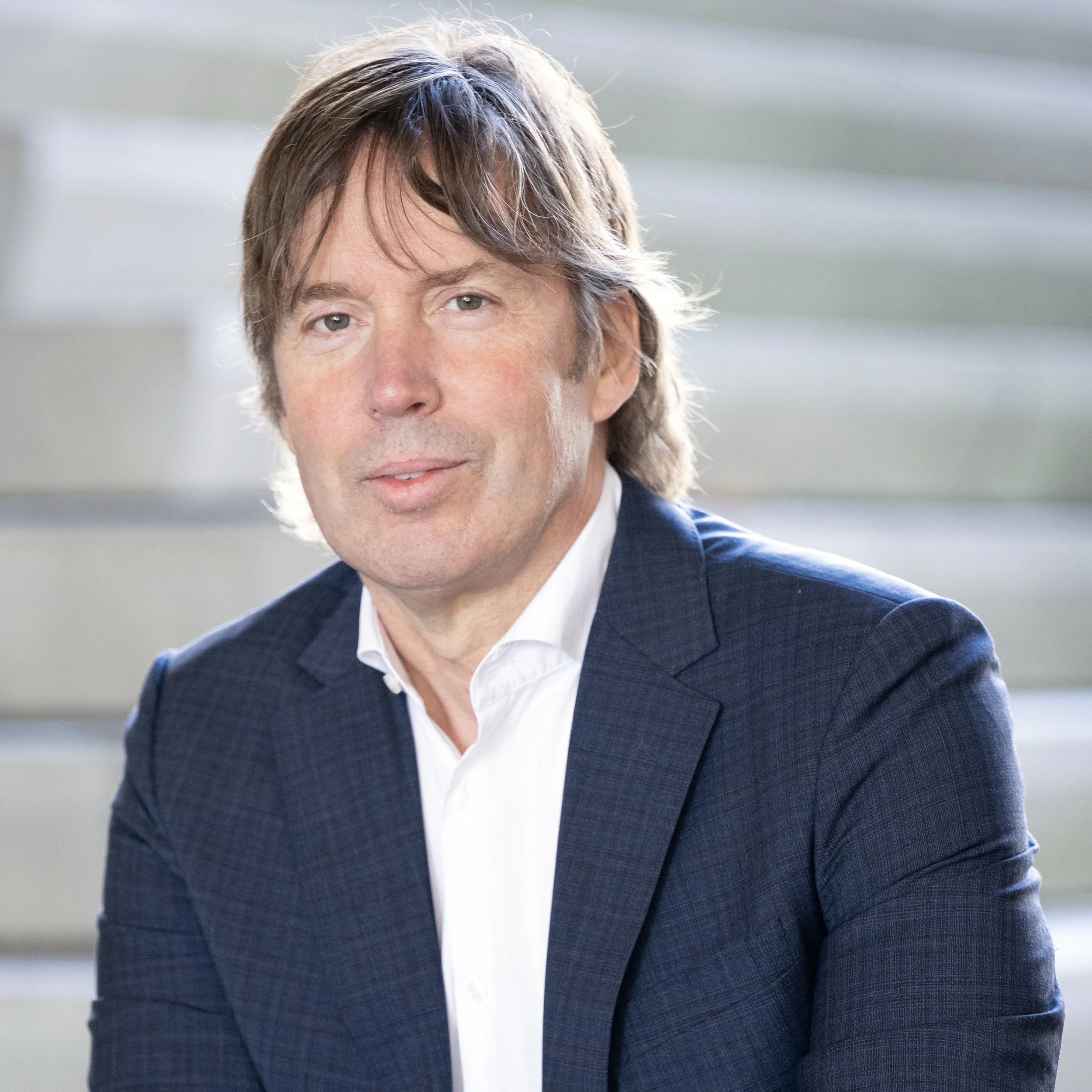
Dr. Marc Ruel, pianist
While pursuing his medical studies, Dr. Marc Ruel completed a Master's in Piano Performance at the Conservatoire de musique du Québec, awarded with the highest distinction. As a young trainee in surgery, he was laureate of an international piano competition and appeared as a soloist across North America and Europe, notably at the Montpellier International Music Festival. He holds a predilection for Beethoven, Liszt and Rachmaninov.
By day, Dr. Ruel is a cardiac surgeon and professor at the University of Ottawa Heart Institute, where he founded its internationally recognized minimally invasive cardiac surgery program. A pioneer in minimally invasive cardiac surgery, he has developed surgical techniques now used around the world and has published more than 500 scientific papers. His contributions to clinical care, innovation and research make him a sought-after cardiac expert globally. He earned numerous national and international honours, including the Royal College of Physicians and Surgeons of Canada's Gold Medal in Surgery, Queen Elizabeth II's Diamond Jubilee Medal, and lifetime achievement awards from several organizations.
He is delighted to return to the piano for this concert.
PROGRAMME NOTES
-
GIOACHINO ROSSINI
The Barber of Seville was originally written in 1773 as a play by the French playwright Pierre-Augustin Caron de Beaumarchais. As an opera, it leans into the playful tradition of Italian comic opera of the 17th and 18th centuries, opera buffa. This form of opera uses comedy to explore human behaviour and challenge assumptions.
While the full stage production relies on singers and scenery, tonight's performance focuses entirely on the Overture. An overture is a standalone orchestral introduction designed to capture the audience's attention and preview the musical themes and energy of the drama to come. Even if you are completely new to the concert hall, you will likely recognize this opening piece—it was famously popularized in pop culture through the iconic Looney Tunes cartoon What’s Opera, Doc? (as well as its companion short, Rabbit of Seville), cementing Rossini's frantic, joyful melodies into the minds of generations.
The Story
Act I
The streets of Seville bustle with activity. Each citizen has an ailment or dilemma that needs solving–like the aristocrat Count Almaviva, who has fallen in love with Rosina. Unfortunately, her oppressive legal guardian Dr. Bartolo intends to marry Rosina himself to gain control of her fortune. Determined to win over Rosina based on true love rather than for his wealth or title, Almaviva serenades Rosina outside Bartolo’s house disguised as a member of a tuna, a traditional Spanish musical ensemble made of university students. Almaviva pays the ensemble and their leader Fiorello, and shoos the rowdy crowd away. Figaro, the barber of Seville, finally arrives. He’s quick-witted, resourceful, and deeply connected to everyone in town. After listening to Almaviva’s predicament, Figaro agrees to help, devising a series of elaborate schemes to outsmart Bartolo. Having heard “Lindoro’s” serenade, Rosina writes a letter expressing her budding love for the mysterious suitor while warning "Lindoro” that she can be sweet, but like a viper when crossed. Meanwhile, Rosina’s music teacher Don Basilio muses on the benefits of slander and schemes with Bartolo to discredit Almaviva, whom he suspects is Rosina’s secret lover. Figaro arrives and confirms to Rosina that she is indeed the object of “Lindoro’s” affection; she hands him a note to deliver to "Lindoro." Noticing evidence that Rosina has been writing a letter, Bartolo confronts her and doubles down on his reprimands. Putting Figaro's plan into action, Almaviva pushes into the house disguised as a drunken soldier who claims to be billeted there. Chaos ensues, and the attempt fails, but Almaviva is released to everyone's shock.
Act II
Almaviva returns in another disguise, this time posing as “Don Alonso,” a music teacher supposedly sent to replace Rosina’s usual instructor. As they reaffirm their love, Figaro distracts Bartolo with a shave and steals a key to Rosina’s balcony. Berta, Bartolo’s servant, comments on the outrageous comings and goings of the household. Bartolo grows increasingly suspicious and tries to thwart the lovers by arranging his marriage to Rosina immediately. Distraught by the discovery of a letter that appears to cast doubt on “Lindoro’s” sincerity, Rosina agrees to marry Bartolo. With available options running out, Figaro and Almaviva decide on the ultimate strategy: to reveal the truth. But will Figaro’s resourcefulness be enough to outwit Bartolo, and is Almaviva’s sincerity enough to win Rosina’s heart?
-
GABRIEL FAURÉ
Much of Fauré's music is characterized by limpid melodies that float on a sea of harmonic elegance, their sails often billowed by a modality which conjures an antique impressionistic ambiance. Antiquity is a proper aura for a work titled Pavane, for the word applies to a stately 16th-century dance that originated in Italy. Fauré's 19th-century incarnation of this slow, processional type of dance mirrors the prototype in being temperamentally austere and rhythmically precise (the accompaniment is often in regularly paced pizzicatos in the strings). The main theme is at once languid and remote. Its first sentence, taken, in turn, by a flute, then oboe and clarinet, is the chief substance of the piece, although a new idea is introduced midway which provides some little intensity - everything is relative.
Fauré wrote a choral part into the score, but, knowing that the piece is quite complete in the orchestra alone, indicated that the voices could be used or not.
– Orrin Howard
Program notes curtesy of the LA Phil
-
MAXIME GOULET (b. 1980)
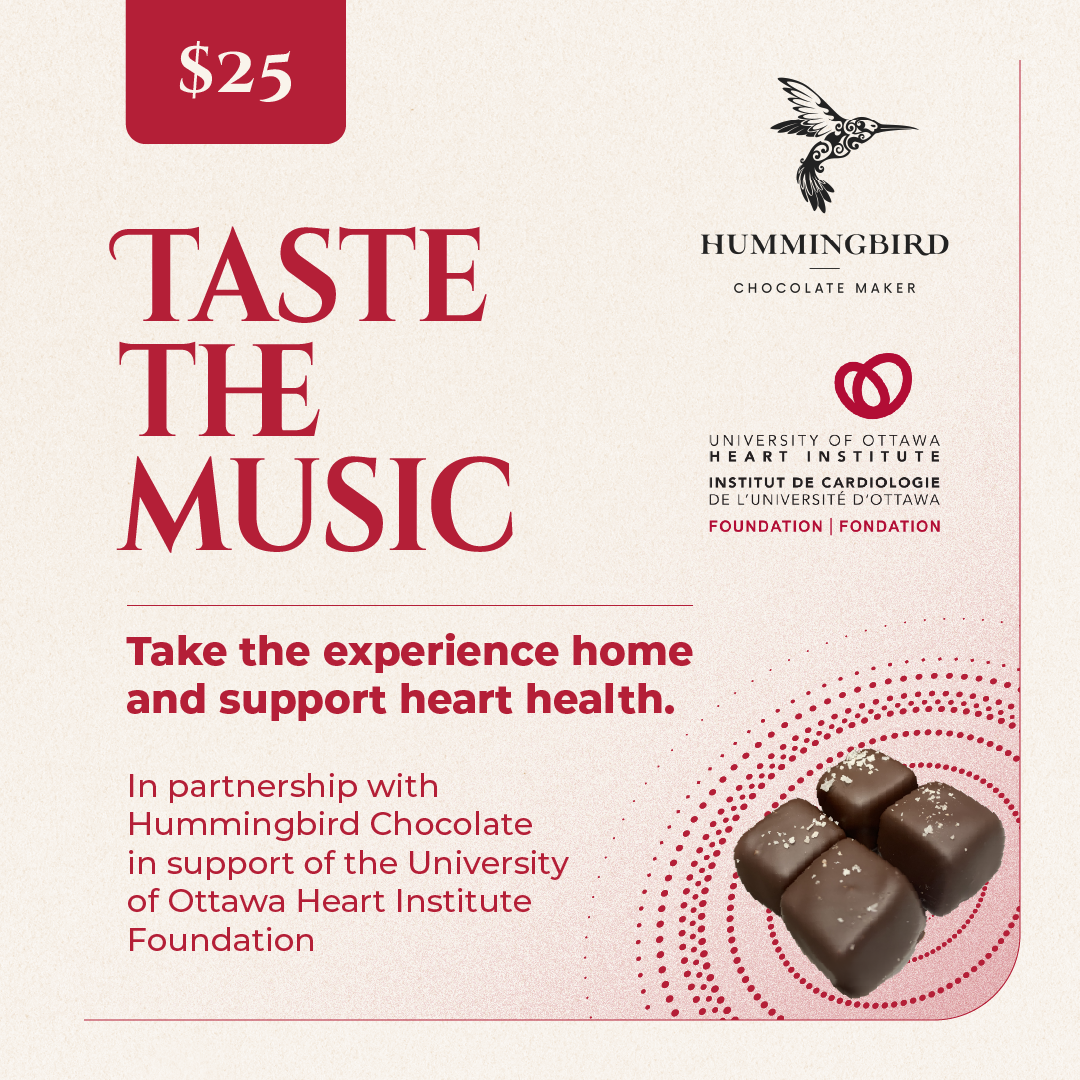
Listen to classical music while eating chocolate! Symphonic Chocolates is a perfect soundtrack for a chocolate tasting. It’s an orchestral suite in four short movements in which each movement evokes a different flavour of chocolate. During the concert, the audience is invited to eat four small chocolates while each movement of corresponding flavour is being played.
I – Caramel Chocolate: A long lyrical melody supported by a rich and enveloping sonority.
II – Dark Chocolate: An intense habanera of desire and seduction, spiced up with a dissonant bitterness.
III – Mint Chocolate: A delicate freshness with icy cold sonorities.
IV – Coffee-infused Chocolate: An espresso tempo with a Brazilian flavour.
Commissioned by the National Academy Orchestra of Canada, and their artistic director Boris Brott, as part of a composer residency, for the 25th anniversary of the Brott Music Festival. The piece is dedicated to Ardyth and Boris Brott to thank them for all the artistic support they have given to the composer.
Premiere: August 2nd, 2012, by the National Academy Orchestra of Canada and the conductor Boris Brott, during the Brott Music Festival, in Hamilton.
Visit Symphonic Chocolates’ web site:
-
LUDWIG VAN BEETHOVEN
I. Allegro
II. Adagio un poco mosso –
III. Rondo: Allegro ma non troppoOf the published concertos by Beethoven (1770–1827), his Fifth Piano Concerto, which he composed during the winter of 1808–1809, was the last one he completed in that genre. (He started to write a sixth piano concerto in 1815 but abandoned the project with only part of the first movement written.) Beethoven dedicated Op. 73 to Archduke Rudolph, who is also the dedicatee of the Fourth Piano Concerto, among many other works. By then, Rudolph, who was a formidable pianist and Beethoven’s sole composition pupil, had become a devoted patron and friend of the composer—in February 1809, he was one of three sponsors who helped set up an annuity for Beethoven. Between the concerto’s completion in 1809 and Breitkopf & Härtel’s publication of the score in February 1811, there was at least one private performance given of it by Rudolph himself; on January 13, 1811, Johann Nepomuk Chotek reported hearing the Archduke perform at Prince Leibowitz’s “an extraordinarily difficult and artful but not at all pleasing concerto by Beethoven…with very much technique and expression.” The first public performance of the concerto occurred later that year, on November 28, by Friedrich Schneider in Leipzig; Carl Czerny gave the first Viennese performance in February 1812 (evidently, Beethoven’s deafness was now too advanced for him to appear as soloist in his own concertos).
The nickname of “Emperor” for Op. 73 is not Beethoven’s; it seems to have been applied predominantly in English-speaking countries to signify the work’s special grandeur. Compared to the composer’s earlier concertos, Piano Concerto No. 5, as Beethoven scholar William Kinderman observes, “is cast in a more brilliant, heroic mould. Its outer movements assume a character, with rhythmic figures evocative of military style and a formal breadth reminiscent of the Eroica Symphony,” which is also in the key of E-flat major. Notably, the innovations in concerto writing that Beethoven brought to Op. 73—particularly a new brilliance in the solo part combined with symphonic procedures—would go on to influence the grand piano concertos of the later 19th century by Robert Schumann, Franz Liszt, Johannes Brahms, and many others.
The first movement has an expansive structure with an opening that was novel for its time—a written-out cadenza of florid arpeggios and runs for the soloist triggered by imposing orchestral chords. Only after that does the orchestra start the exposition, with the first violins introducing the first main theme—a confidently striding tune. Not long after, the contrasting second theme unfolds in two parts, appearing initially in the minor mode, stated by the first violins in dainty tiptoe fashion, then in a major-mode, smooth-lined version intoned “sweetly” on horn. Later, following the piano’s gentle turn on the first theme and some ruminating flights, the second theme undergoes further transformation from a delicate triplet pattern in the minor to a beautiful meditative line in the major mode (foreshadowing the slow movement), after which the orchestra reinterprets it as a snappy march. In the movement’s central section, motives from both themes are further developed, with a mighty passage of double octaves for the soloist in between. After a dramatic return to the bold cadenza of the beginning (though now shortened), the recap of themes proceeds as before. Near the end, at the conventional orchestral pause for an improvised cadenza, Beethoven subverts expectations by instructing the soloist not to make a cadenza (“non si fa una cadenza”) and to continue directly on to a written-out solo passage. It leads back to the second theme on horn over sparkling piano figures, which then take us into the final dazzling passages of the movement.
The second movement, with its serene atmosphere, seems to be from another world entirely. Set in the key of B major (tonally remote from the concerto’s main key of E-flat major), it opens with muted strings singing a melody of devotional character. When the piano enters, this becomes a slow-moving hymn underneath the soloist’s contemplative fantasia. After a free variation and a cadenza-like passage, the piano returns to the opening melody, adding embellishments as it progresses. The tune is then picked up by the woodwinds and is further outlined by the first violins on the offbeats, while the piano decorates it with alternating notes. Eventually, the music settles to stillness on a B held on bassoons, then shifts downward a semitone to B-flat, now quietly suspended on horns. Over this, the piano tentatively tries out an ascending pattern of chords; then, after a brief pause, it breaks out into the robust main theme of the finale. As per rondo form, this tune’s recurrences are interspersed with extended episodes featuring virtuosic elements both delicate and boisterous, all of it giving the movement a grandly sonorous effect through to its exuberant conclusion.
Program note by Hannah Chan-Hartley, PhD
Program notes curtesy of the National Arts Centre Orchestra
SPONSORS
Thank you to our partners & sponsors for making this event possible.





Administration
STAFF
Mathieu Roy, Orchestra Operations Manager
Vicente García, Personnel & Production Manager
Jacqueline Lee, Stage Manager
Michael Goodes, Front of House Technician
BOARD OF DIRECTORS
Bernie Etzinger, President & Chair
Tayler Farrellt, Corporate Secretary
Venassa Baptiste, Treasurer
Alexis Nickson, Director
Fiona Charlton, Director
Lara Deutsch, Musicians' Representative (Ex-Officio)
Jean-François Marquis, Musicians' Representative (Ex-Officio)
Ottawa Symphony Orchestra
(613) 231-7802 | info@ottawasymphony.com
Charity Registration #119071876RR0001
Do you like what you hear? Do you want to help support the arts in your community?
Donate to the Ottawa Symphony today to help support our programs. The cost of producing orchestral music is far greater than we could ever hope to make through ticket revenue. The OSO relies on funding from the government, foundations, and individual donors like you